
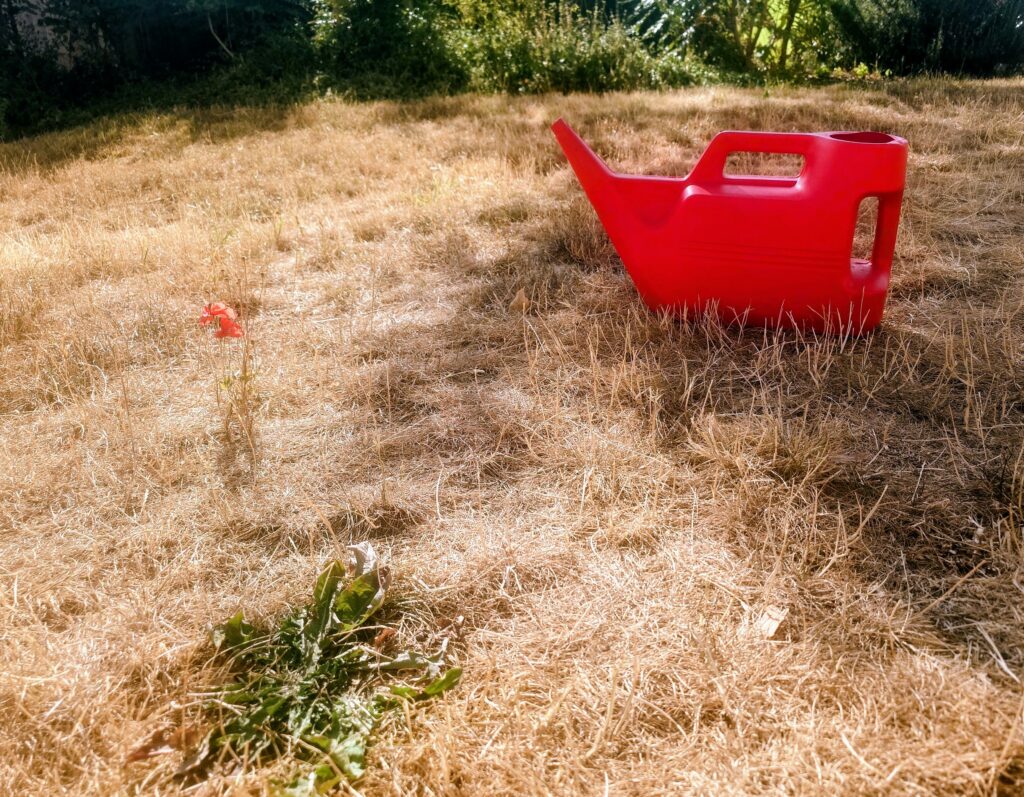
When midsummer hits Somerset, UK lawns face a perfect storm of heat, high traffic, and sudden dry spells. Following the record-breaking heatwave this year, many homeowners have instinctively run out to cut their grass shorter, hoping to keep the garden looking neat for longer.
Unfortunately, “scalping” a lawn during a hot spell is the fastest way to turn a lush green turf into a patchy, weed-infested dustbowl.
Managing a lawn through a British dry spell shouldn’t be about fighting nature but rather working with turf biology to protect the lawn’s roots until the autumn rains return.
The Danger of “Scalping”: Why Shorter Cuts Invite Weeds
Grass leaves are the plant’s solar panels and moisture shades. When you cut grass too low during dry weather, two damaging things happen immediately:
-
- Soil Evaporation Soars: Without a tall canopy of grass blades to shade the soil surface, the summer sun bakes the root zone, evaporating what little soil moisture remains.
-
- Weeds Take Over: Deep-rooted, opportunistic weeds like dandelions, plantains, and bindweed thrive in sun-baked, exposed soil. Scalping removes the natural shade that suppresses weed seed germination.
The Golden Rule of Summer Mowing: Never remove more than one-third of the total grass height in a single cut. During June and July, raise your mower deck height by 1 to 2 notches (aiming for a height of 40mm to 50mm).
The “Above-Ground to Below-Ground” Mirror
There is an exact scientific correlation between the height of your grass blades and the depth of its roots:
| Mowing Height | Root Depth | Drought Resistance |
| 15mm – 25mm (Low) | Shallow (2cm – 4cm) | Very Poor – Dries out instantly; prone to heat shock. |
| 35mm – 45mm (Medium) | Moderate (6cm – 10cm) | Good – Holds soil moisture; handles foot traffic. |
| 50mm+ (High / Dry Spell) | Deep (10cm+) | Excellent – Accesses deep water tables in subsoil. |
Taller grass blades shade the soil, keeping the root zone significantly cooler. In Somerset’s heavy clay soils, this shade also prevents the surface from baking into a cracked, impenetrable crust.
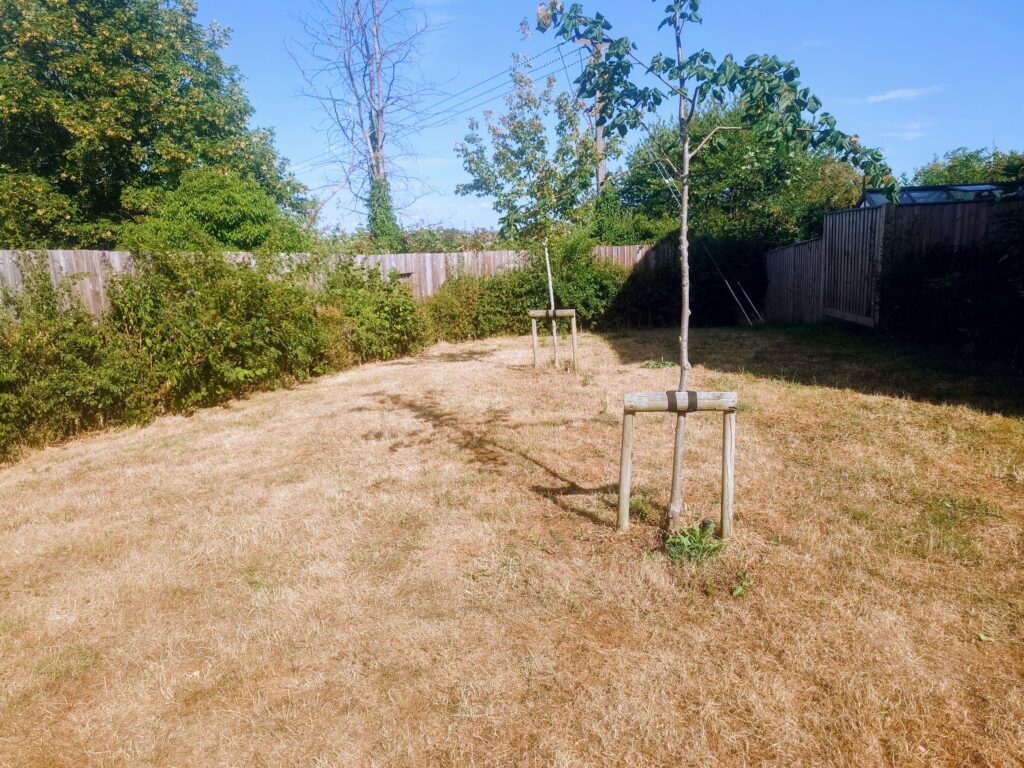
Why a Brown Lawn Isn’t Dead—It’s Just Resting
One of the biggest anxieties for homeowners during a hot spell is watching a vibrant green lawn turn straw-brown.
It is important to understand that cool-season grasses common in the UK (like perennial ryegrass, fescues, and bentgrass) have an evolutionary defense mechanism: dormancy.
When soil moisture drops below a critical threshold, the grass plant deliberately allows its top growth to turn brown and die back. It directs all remaining energy down into the crown and root system to survive.
-
- Dormant turf will bounce back to a rich green within 7 to 10 days of sustained rainfall in late August or September.
-
- Dead turf turns brittle, easily pulls out of the ground in mats, and fails to recover when rain returns.
Unless you have a newly laid lawn installed within the last 6 to 12 months, you do not need to waste hundreds of litres of water trying to keep established grass bright green all summer.
Smart Summer Watering Rules
If you do choose to water high-traffic areas or ornamental lawns, how you water matters far more than how often.
-
- Water Deeply, Infrequently: A quick 10-minute sprinkle every evening does more harm than good—it encourages roots to sit right near the surface where they get scorched. Instead, give the lawn one deep soak (20–30 minutes) once a week in early morning.
-
- Water Early Morning: Always water between 5:00 AM and 8:00 AM. Evening watering leaves grass blades wet overnight, creating a breeding ground for fungal diseases like Red Thread.
- Keep Blades Sharp: Dull mower blades tear grass tissue rather than slicing it cleanly. Torn, frayed grass tips turn white/brown and lose water rapidly through evaporation.
Let the Professionals Manage Your Seasonal Transitions
Balancing mowing heights, machinery setup, and feeding programs through unpredictable UK summers takes time and horticultural insight.
At Frome Lawns and Hedges, we adjust our cutting heights dynamically throughout the season based on weather conditions and soil moisture levels across Frome, Beckington, Mells, and surrounding Somerset villages.
Need expert guidance on restoring a tired or heat-stressed lawn? Contact our RHS-qualified team today to schedule an autumn lawn assessment.